
This is an old revision of the document!
Table of Contents
Pylon Placement
BIS uses an inconsistent pylon proxy placement. We went a different way. A more logical way, in our opinion at least. We went with the real world NATO System.
NATO uses specific standards, primarily guided by STANAG 3726 and related U.S. military standards like MIL-STD-8591, for “bail (portal) lugs” used to suspend munitions from aircraft racks. The key dimension for compatibility is the lug spacing, not the individual lug's size. Common NATO/military lug spacings include:
- 14 inches (356 mm): Used for 250 lb and 500 lb class stores, such as the GBU-38.
- 30 inches (762 mm): Used for 1,000 lb and 2,000 lb class stores, such as the GBU-31.
The lugs themselves are robust to handle the weight and forces involved. A specific embodiment in a patent described one such lug as approximately 4 inches wide, 6 inches long, and 3 inches deep.
How the BIS Dynamic Pylon System works
In the aircraft model, you add a proxy object. These appear as a triangle in Object Builder. The arma dynamic pylon system uses the “proxy object” placed in the model to to located any weapons and racks you select.
BIS decided to do things in a very odd and in my opinion illogical way. Their way means you need to make a custom pylon for each plane or move the proxy location in each model to suit different pylons.
This poses a problem with a pack as large and as diverse as ours.
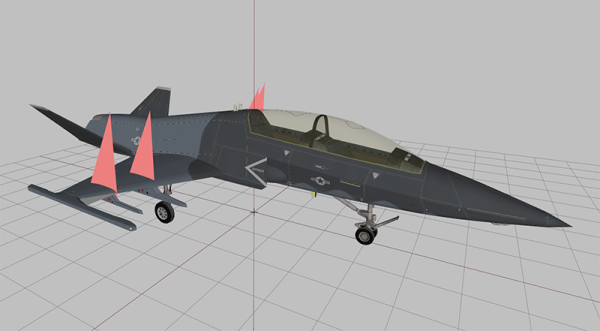
"The RKSL Way"
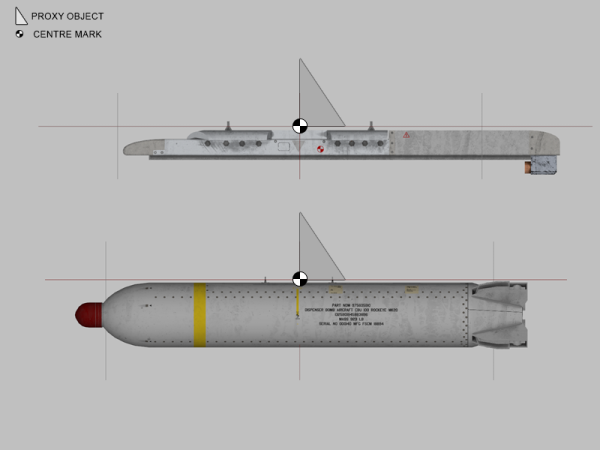
By using the centre point between the lugs we get consistent and flexible weapons placement on any pylon.
The images below illustrate the proxy placement in the plane model. The first shows the proxy that is on the plane.
- The red triangle dictates the orientation of the proxied object.
- The size of the proxy triangle is irrelevant, scaling it does not change the scale of the proxied object.

The second image shows the 'weapon carrier' or launcher rail in this case. A LAU-117 for AGM-65 Mavericks.


lkjh
Page Tools


